
ADVERTISEMENT
Paleontologists have made a discovery that can change how we understand dinosaurs. Despite centuries of research into ancient times, there’s so much more to uncover. A few months ago, a team of Argentinian scientists found an intact dinosaur egg, which they believe is 70 million years old. Against all probabilities, the fossil is in almost perfect condition, far better shape than other eggs found in in that area. The researchers say the egg may have embryonic remains that can give insight into how dinosaurs were born.
Intact Dinosaur Egg Found in Argentina
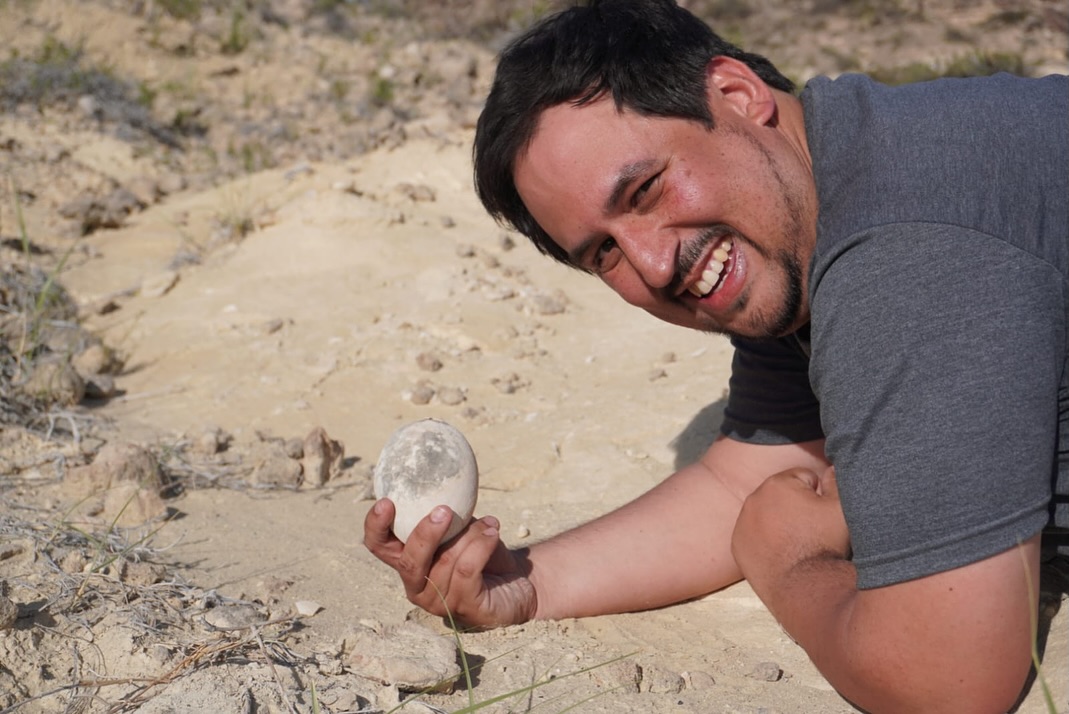
The discovery was made during the Cretacian Expedition that took place in October. The expedition involved paleontologists from Argentina’s National Scientific and Technical Research Council (CONICET), the Azara Foundation, and the National Geographic Society. The project was broadcast live, so many people were invested in the campaign before the fossil appeared. As luck would have it, the discovery did not take place on the livestream. Dr. Federico Agnolín was walking from the quarry, away from the cameras, to the truck. He suddenly noticed an egg on the earth, and his colleague, Dr. Matías Motta, filmed the event on his personal camera.
The researchers believe the fossilized egg is from the Cretaceous period, and they hope it contains embryonic material that can shed light on the development and reproduction of dinosaurs. They also believe the egg is from a carnivorous dinosaur, which makes it even more rare. Carnivorous dinosaur eggs tend to have thinner and more breakable shells compared to herbivorous eggs. Therefore, the scientists were even more shocked to find the delicate egg in such remarkable condition.
“This is quite possibly the FIRST finding of this guy in South America,” reads the caption to an Instagram post from the Paleocave account run by the Laboratory of Comparative Anatomy and Evolution of Vertebrates. “As you can see, this fossil is over 70,000,000 years old, and HE WASN’T ALONE, WE FOUND A NEST.”
What Kind of Dinosaur Egg?
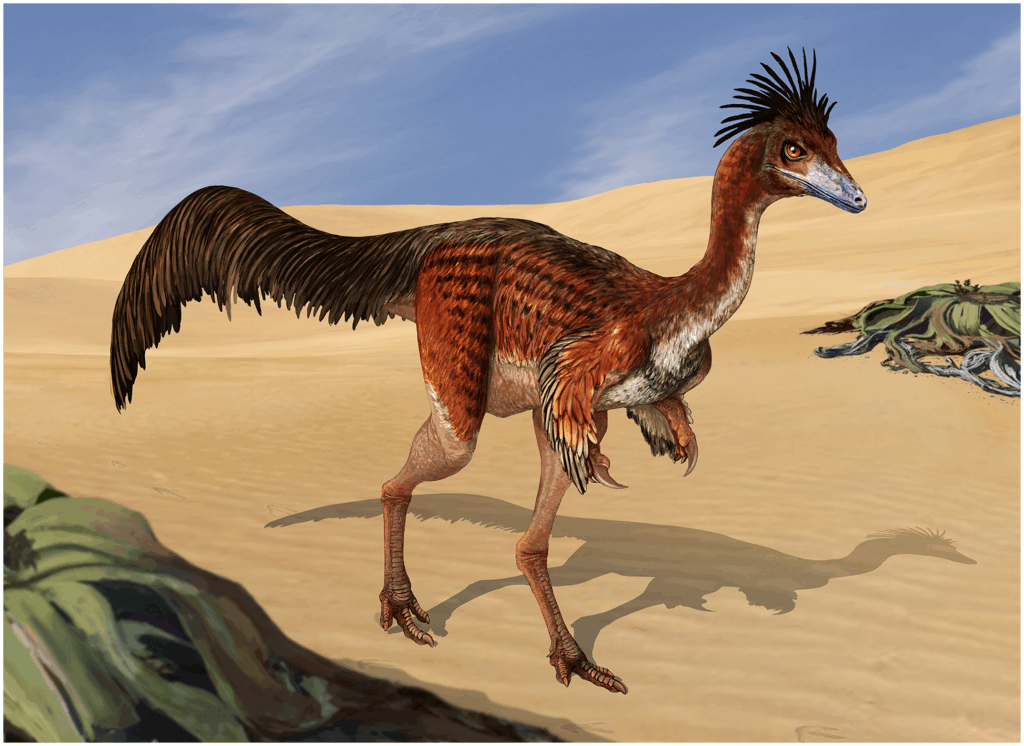
Image Credit: Abel G. Montes, from Wikimedia Commons, licensed under CC BY-SA 4.0
At first, the researchers say the fossil is most likely the Bonapartenykus genus, which is a small, carnivorous theropod from the late Cretaceous period native to Argentina. They based this theory on its oval shape and estimated age. However, it was soon ruled out after comparing it to previously found egg fragments. “It has a very different ornamentation,” said Agnolín, according to Discover Magazine. “We believe we’re looking at another kind of carnivorous dinosaur, perhaps one whose adult form is not yet known.”
The paleontologists hope the contents of the intact egg will clarify which dinosaur it is. Furthermore, if the dinosaur embryo is still intact inside the egg, the researchers can learn about its posture, respiratory system, behavior, and how the species evolved. “If it’s a carnivorous dinosaur, it would teach us, for example, how dinosaur eggs evolved into birds,” said Gonzalo Leonel Muñoz, a vertebrate paleontologist, to National Geographic. “It could show us what their chicks were like, what state they were in at birth, whether they’re fully developed or not… Any information it provides will be novel and incredibly interesting.”
However, the fossil was only one element of this incredible find. The other was the nest. “There isn’t a single known carnivorous dinosaur nest in South America,” Agnolín said. “These animals are the ancestors of birds. So this nest and these eggs will surely help us understand what happened during that transition. Think of a reptile, like a lizard or a turtle: they dig a hole and drop their eggs in. In contrast, modern birds build nests, lay their eggs, incubate them, and raise their chicks…”
Read More: Is This Real? Company Claims to Create ‘T. Rex Leather’ from Dinosaur DNA
Scientific Discovery is for Everyone
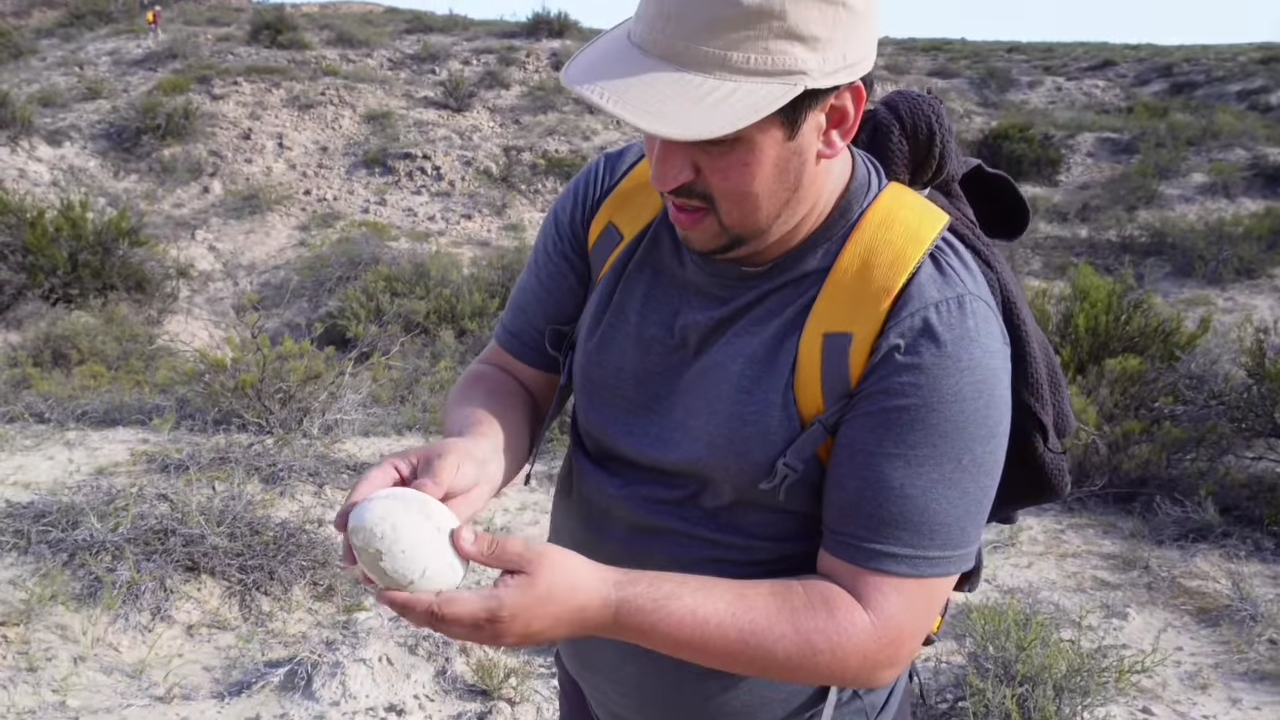
Image Credit: @paleocueva.lacev/Instagram
In the past, the public could only imagine the scene of discovery. People can’t visit active archeological digs unless they are professionally involved somehow. Today, with the advantage of cameras and livestreaming, anyone with curiosity could watch and learn. The Cretaceous Expedition was the first-ever livestreamed paleontological campaign, and it made other noteworthy discoveries. These included fossils of a long-necked dinosaur and two types of duck-billed dinosaurs that may be new to science. The researchers also found the remains of prehistoric mammals roughly the size of modern mice. “It was already a completely successful campaign because we had found very valuable specimens,” said Agnolín. “But we were lucky enough to find this egg.”
The researchers have yet to fully examine the intact dinosaur egg and reveal their findings. They plan to scan the fossil with a micro-CT. They will continue updating the public via livestream, so everyone will “be surprised or disappointed in real time,” according to Agnolín. “We’ll see if the remains of the embryo’s skeleton are preserved inside. I’m hopeful, but I know it’s very unlikely.”
Read More: Critically Endangered ‘Dinosaur Tree’ Produces Fruit for the First Time
ADVERTISEMENT
