
ADVERTISEMENT
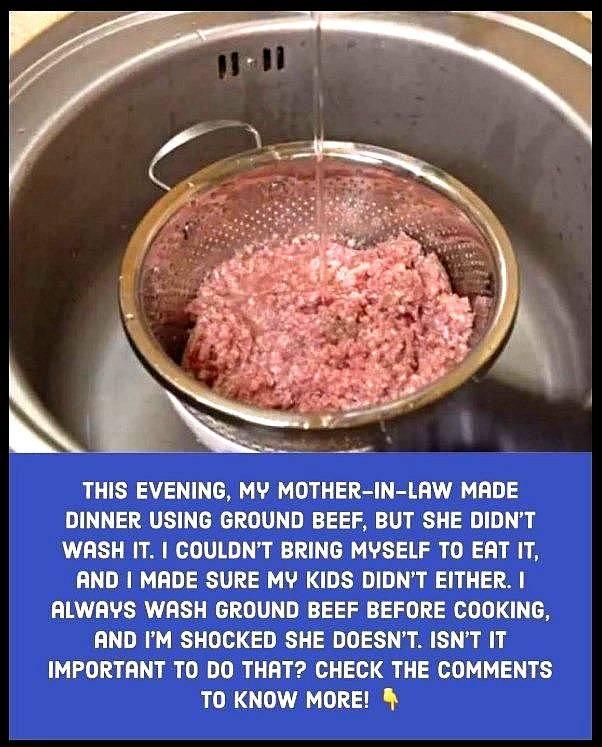
Should You Wash Ground Beef? What You Need to Know
When it comes to cooking, many home cooks instinctively wash meat before preparing it. But when it comes to ground beef, this common kitchen habit could actually do more harm than good. Understanding the risks—and the best practices—can keep your meals safe and delicious.
Why Some People Wash Meat
Washing meat is often done to:
- Remove surface bacteria
- Rinse off blood or slime
- Reduce odors
For whole cuts like chicken breasts or steaks, some people believe washing can help reduce contamination. But with ground beef, the situation is different.
The Risks of Washing Ground Beef
1. Bacteria Spread:
Ground beef can harbor harmful bacteria such as E. coli, Salmonella, or Listeria. Washing it under running water doesn’t eliminate these bacteria—instead, it can spread them to your sink, countertops, utensils, or other foods. This is known as cross-contamination, a common cause of foodborne illness.
For Complete Cooking STEPS Please Head On Over To Next Page Or Open button (>) and don’t forget to SHARE with your Facebook friends
2. Bacteria Are Often Internal:
Unlike whole cuts of meat, ground beef mixes all the surface and internal parts of the meat. Washing the outside won’t reach bacteria that may be mixed throughout. The only reliable way to kill bacteria in ground beef is through proper cooking.
How to Handle Ground Beef Safely
- Skip the wash: Don’t rinse ground beef. Handle it carefully with clean hands.
- Cook thoroughly: Use a food thermometer to ensure it reaches 160°F (71°C) throughout.
- Prevent cross-contamination: Wash cutting boards, utensils, and countertops with hot, soapy water after contact with raw meat.
- Store properly: Keep ground beef in the refrigerator at 40°F (4°C) or below, and cook or freeze by the “use by” date.
Expert Advice
The USDA and CDC strongly advise never washing raw meat, including ground beef. Cooking it to the proper temperature is the safest and most effective way to prevent foodborne illness.
Bottom Line
Washing ground beef may seem like a step toward cleanliness, but it doesn’t make the meat safer—it may actually increase your risk of spreading bacteria. Focus on safe handling, proper storage, and thorough cooking, and your meals will be both safe and delicious.
ADVERTISEMENT
