
ADVERTISEMENT
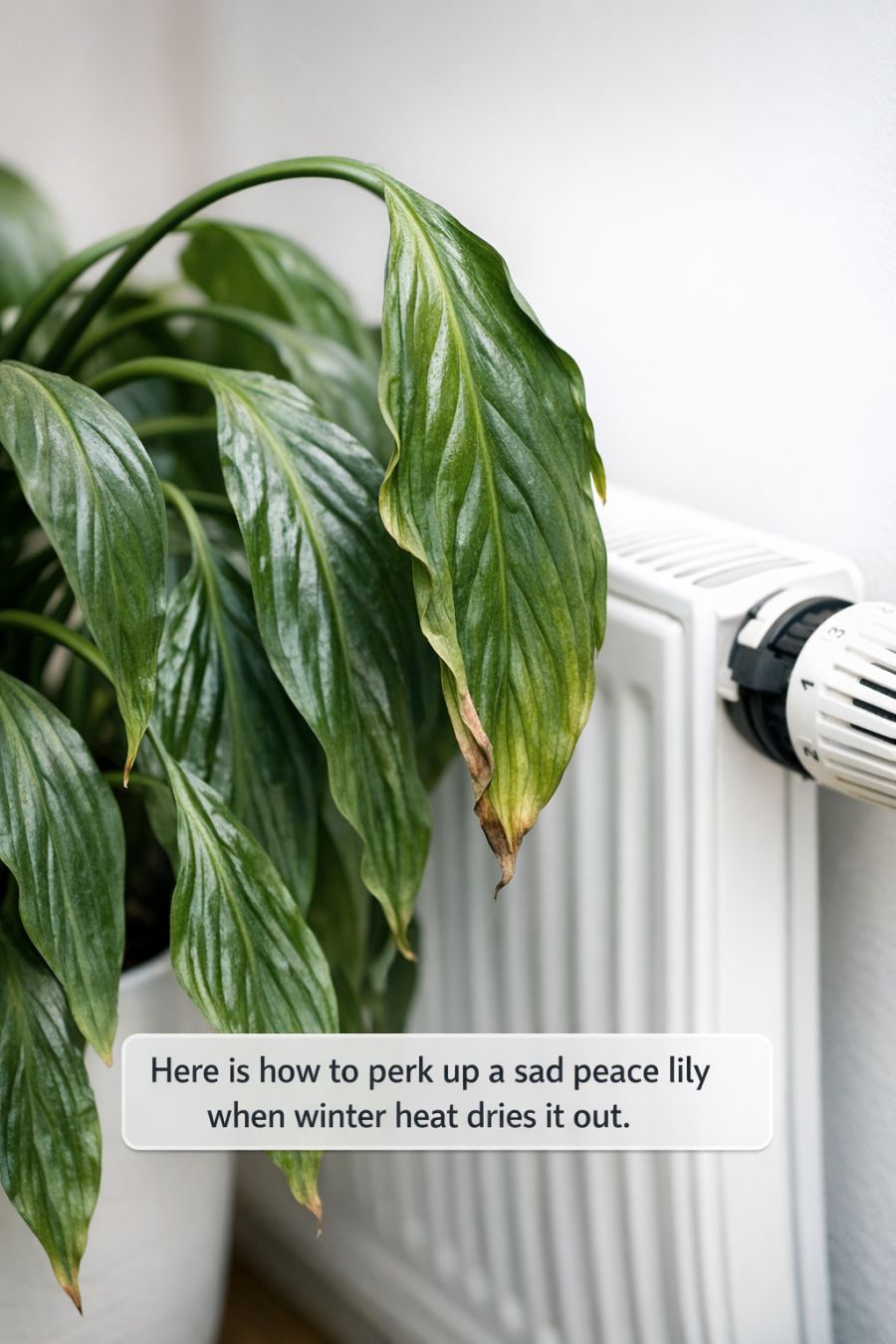
Here’s How to Perk Up a Sad Peace Lily When Winter Heat Dries It Out
Peace lilies are beloved for their graceful green leaves, elegant white blooms, and reputation as one of the easiest houseplants to care for. Yet every winter, countless peace lily owners look at their once-lush plant and wonder what went wrong. Leaves droop dramatically, tips turn brown, flowers disappear, and the whole plant seems tired and lifeless.
If this sounds familiar, you’re not alone—and the good news is that your peace lily is probably not dying. In most cases, it’s simply reacting to the dry, warm indoor air caused by winter heating.
Winter heat is one of the most common reasons peace lilies struggle, but with the right care, they are incredibly resilient and can bounce back quickly. This guide will walk you through exactly how to revive a sad peace lily, why winter heat affects it so strongly, and how to keep it healthy through the colder months and beyond.
Understanding Why Peace Lilies Suffer in Winter
To help your peace lily recover, it’s important to understand what it’s going through.
Peace Lilies Are Tropical Plants
Peace lilies (Spathiphyllum) are native to warm, humid tropical forests. In their natural environment, they grow beneath the forest canopy where:
- The air is consistently humid
- Temperatures are stable
- Light is filtered and indirect
- Soil remains lightly moist
Winter indoor conditions are the opposite of this.
How Winter Heat Affects Your Plant
When you turn on indoor heating, several things happen:
- Humidity drops dramatically
- Air becomes dry and stagnant
- Soil dries out faster
- Leaves lose moisture through transpiration
Peace lilies respond quickly to these changes, often within days.
Signs Your Peace Lily Is Suffering From Dry Winter Air
A peace lily stressed by winter heat may show one or more of the following symptoms:
- Dramatic drooping of leaves
- Brown or crispy leaf tips
- Yellowing lower leaves
- No flowers forming
- Soil drying out faster than usual
- Leaves curling inward
These signs can look alarming, but they are usually stress responses—not permanent damage.
Step 1: Check the Soil Immediately
The first thing to do when your peace lily looks sad is to check the soil moisture.
How to Check Properly
- Insert your finger about 1–2 inches into the soil
- If it feels dry at that depth, your plant needs water
- If it feels soggy or muddy, overwatering may be the issue
Peace lilies are dramatic when thirsty—they droop quickly, but they also recover fast once watered.
The Right Way to Water a Dry Peace Lily
When watering:
- Use room-temperature water
- Water slowly until excess drains from the bottom
- Empty the saucer so roots aren’t sitting in water
Within a few hours, you may see the leaves begin to lift again.
ADVERTISEMENT
