
ADVERTISEMENT
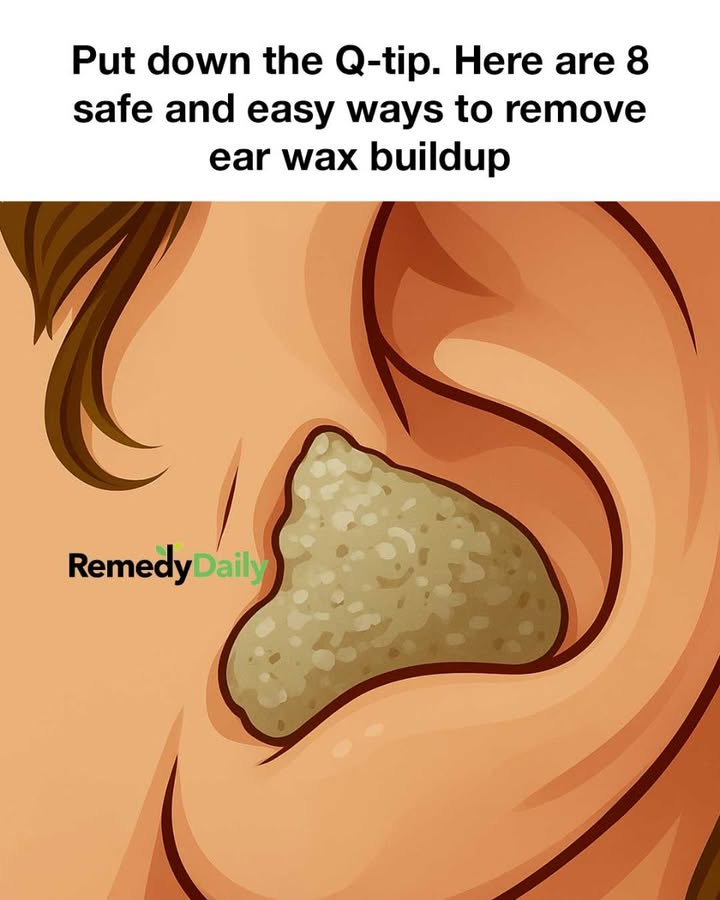
Put Down the Q-Tip: 8 Safe and Easy Ways to Remove Ear Wax Buildup
If you’ve ever reached for a cotton swab after a shower, you’re not alone. Millions of people use Q-tips every day believing they’re helping keep their ears clean. But here’s the truth most people don’t realize:
Q-tips are one of the main causes of ear wax buildup—not the solution.
In fact, doctors and hearing specialists have been warning against inserting anything into the ear canal for decades. Ear wax (also called cerumen) is natural, protective, and usually takes care of itself. Problems arise when we interfere the wrong way.
If your ears feel blocked, itchy, or muffled, don’t panic—and don’t grab a cotton swab. There are safe, simple, and effective ways to manage ear wax buildup without risking damage to your hearing.
Let’s break down what ear wax really does, why Q-tips make things worse, and 8 safe, easy methods to remove excess ear wax the right way.
What Is Ear Wax—and Why Do We Have It?
Ear wax is not dirt. It’s not a sign of poor hygiene. It’s actually one of your body’s built-in defense systems.
Ear wax helps by:
- Trapping dust, dirt, and debris
- Preventing bacteria and fungi from growing
- Lubricating the ear canal to prevent dryness and itching
- Protecting delicate ear structures
Your ears are designed to be mostly self-cleaning. Jaw movement from talking and chewing naturally helps wax migrate outward, where it dries up and falls away.
Problems start when wax gets pushed deeper instead of moving out.
Why Q-Tips Make Ear Wax Buildup Worse
Using a cotton swab may feel satisfying, but it often causes more harm than good.
Here’s what happens when you use a Q-tip:
- Wax is pushed deeper into the ear canal
- The wax becomes compacted and harder to remove
- The ear canal may become irritated or scratched
- Risk of infection increases
- In severe cases, the eardrum can be damaged
That clean feeling? It’s misleading.
Doctors often say:
“Never put anything smaller than your elbow in your ear.”
Signs You May Have Ear Wax Buildup
Not everyone produces excess ear wax, but when buildup occurs, symptoms may include:
- Muffled or reduced hearing
- A feeling of fullness or blockage
- Ear discomfort or mild pain
- Ringing in the ears (tinnitus)
- Dizziness (in some cases)
- Itching inside the ear
If symptoms are severe, painful, or sudden, a healthcare professional should be consulted. But for mild to moderate buildup, safe home care is often enough.
When NOT to Try Home Removal
Before trying any method, it’s important to know when not to attempt wax removal at home.
Avoid home treatments if you:
- Have ear pain or discharge
- Have a known eardrum perforation
- Recently had ear surgery
- Experience sudden hearing loss
- Have severe dizziness
In these cases, professional care is the safest option.
ADVERTISEMENT
