
ADVERTISEMENT
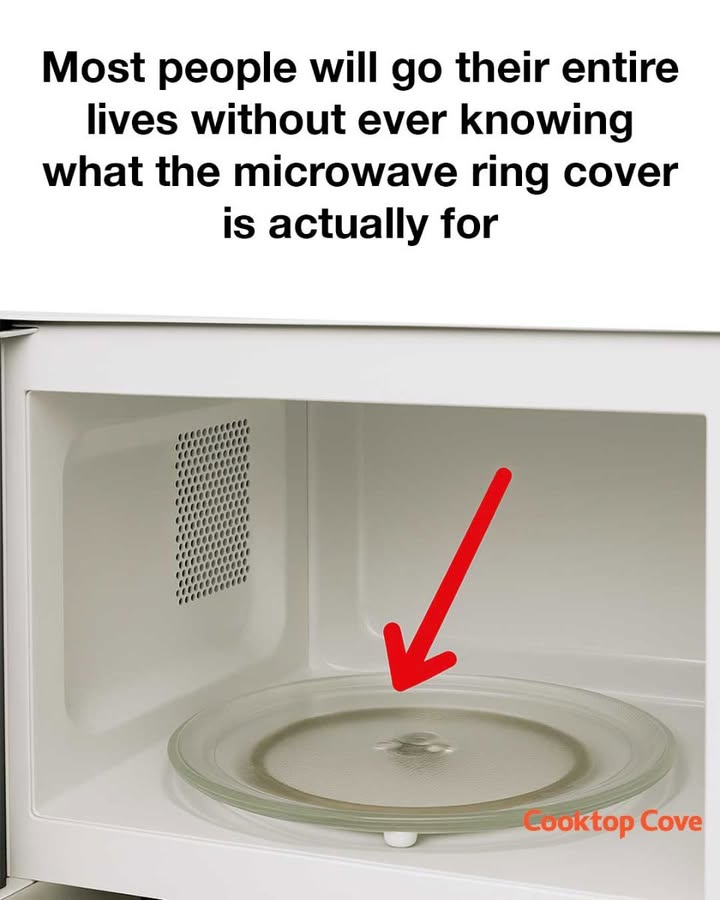
Most People Will Go Their Entire Lives Without Knowing What the Microwave Ring Cover Is Actually For
Microwaves are one of the most common appliances in modern kitchens. They are quick, convenient, and nearly indispensable in daily life. Yet, despite their ubiquity, many of us overlook the small, often mysterious components that make these machines work efficiently. One such part is the microwave ring cover—or more accurately, the glass turntable and its rotating ring underneath. You’ve probably seen it hundreds of times, but chances are, you’ve never thought much about its purpose. And truthfully, most people don’t.
This article dives deep into the science, design, and practical benefits of the microwave ring cover. By the time you finish reading, you’ll not only understand why it exists but also how it can impact the longevity of your microwave, the quality of your food, and even your safety.
1. What Is the Microwave Ring Cover?
At first glance, the microwave ring cover looks like a simple glass plate resting on a plastic or metal ring with small wheels or rollers. But each part has a crucial role:
- Glass Turntable: This is the plate you place your food on. Its primary purpose is to hold the food and rotate it evenly.
- Rotating Ring (Roller Ring): This ring sits beneath the glass plate and has small wheels or rollers. It ensures smooth rotation, distributes weight evenly, and minimizes friction.
- Central Spindle: The small protrusion in the center connects the turntable to the motor beneath, transmitting motion so the plate spins correctly.
Most people mistake this setup as just a rotating convenience. In reality, it’s an engineering solution that solves several problems related to cooking food evenly and safely.
2. Why Does the Microwave Plate Rotate?
If you’ve ever wondered why food cooks unevenly in a microwave, the answer lies in the physics of microwave radiation.
- Microwave Distribution: Microwaves heat food by causing water molecules to vibrate, generating heat. However, microwaves don’t always distribute energy evenly inside the oven. Some areas may be “hot spots,” while others remain cool.
- Rotation Mechanism: The turntable rotates the food, exposing it to more even energy distribution, reducing cold spots.
- Consistency: Rotation ensures that your leftovers, frozen meals, or reheated drinks heat uniformly without constant stirring or flipping.
Without the turntable or rotating ring, you may find parts of your food scalding hot while other parts remain frozen—an all-too-common problem in households worldwide.
3. The Science Behind the Roller Ring
The roller ring isn’t just there for fun—it’s a subtle but critical piece of engineering.
- Weight Distribution: Plates of food can be heavy, especially casseroles or bowls of soup. The ring spreads this weight evenly, reducing wear on the motor.
- Smooth Rotation: The small wheels reduce friction between the plate and the microwave base, allowing quiet, seamless spinning.
- Protection: The roller ring acts as a buffer, preventing direct contact between the glass plate and the microwave floor. This reduces the risk of scratches, chips, and eventual breakage.
Without this ring, microwaves would be louder, turntables would wear out faster, and the likelihood of cracked plates would increase significantly.
ADVERTISEMENT
