
ADVERTISEMENT
How to Clean Your Dishwasher in 3 Easy Steps (And Why It Matters More Than You Think)
Most people assume that dishwashers clean themselves. After all, they wash dishes every day with hot water and detergent—so they must stay clean, right?
Unfortunately, that’s not true.
Over time, food particles, grease, soap residue, and mineral buildup quietly collect inside your dishwasher. The result? Dishes that come out cloudy, smelly interiors, slower drainage, and a machine that doesn’t perform as well as it should.
The good news is that cleaning your dishwasher doesn’t have to be complicated, expensive, or time-consuming. In fact, you can do it thoroughly in just three easy steps, using simple household items and a little attention to detail.
Once you learn this method, you’ll wonder why you didn’t start doing it sooner.
Why Cleaning Your Dishwasher Is So Important
Before we get into the steps, let’s talk about why dishwasher cleaning actually matters.
1. Dirty Dishwashers Don’t Clean Well
If your dishwasher is clogged with grease, food debris, or mineral deposits, it can’t wash effectively. Water flow becomes restricted, detergent doesn’t dissolve properly, and dishes come out less clean.
2. Odors Come From Hidden Buildup
That unpleasant smell when you open the dishwasher door? It’s usually caused by trapped food particles and bacteria hiding in filters, spray arms, and seals.
3. Regular Cleaning Extends Appliance Life
A clean dishwasher runs more efficiently, experiences fewer clogs, and is less likely to develop costly mechanical problems.
4. It Saves Money Over Time
Preventive cleaning helps you avoid repairs, replacements, and wasted detergent from ineffective wash cycles.
In short, a clean dishwasher means cleaner dishes, fewer odors, and a longer-lasting appliance.
What You’ll Need (Nothing Fancy)
One of the best things about this method is that it doesn’t require specialty cleaners or expensive products.
Basic Supplies:
- Baking soda
- Warm water
- A soft brush or toothbrush
- A cloth or sponge
- Dish soap
That’s it. Everything is likely already in your kitchen.
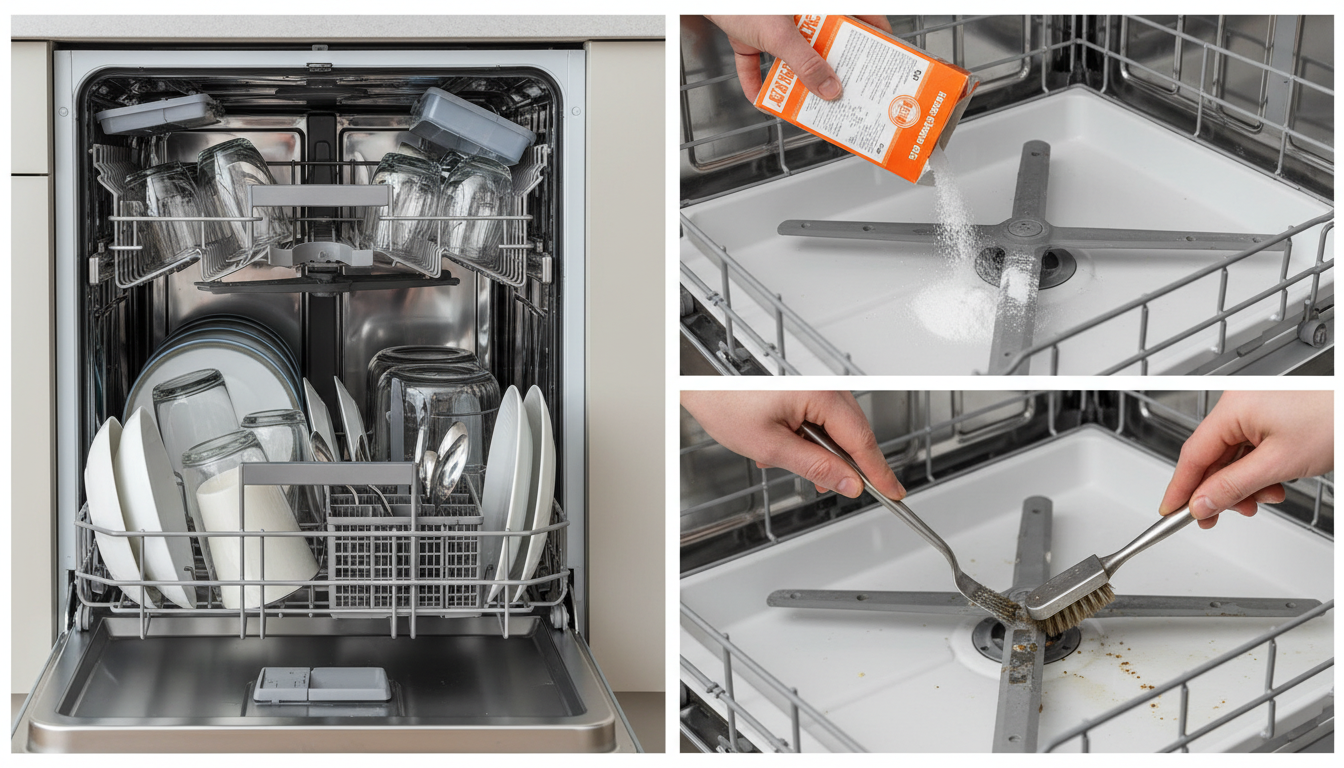
Step 1: Clean and Load the Dishwasher Properly
This step might surprise you, but how you load and prepare your dishwasher plays a major role in keeping it clean.
Remove Large Food Debris
Before loading dishes, scrape off excess food. You don’t need to pre-wash everything, but large chunks should go in the trash—not the dishwasher.
Check the Filter
Most dishwashers have a removable filter at the bottom. This area often traps:
- Food particles
- Grease
- Paper labels
- Small debris
Remove the filter and rinse it under warm water. Use a soft brush if needed.
Load Dishes Correctly
- Place cups and containers upside down
- Avoid blocking the spray arms
- Don’t overcrowd racks
- Keep utensils separated for better water flow
Proper loading ensures better cleaning and prevents food from settling in hard-to-reach areas.
Step 2: Deep Clean with Baking Soda
Baking soda is a powerful yet gentle cleaner that neutralizes odors, breaks down grease, and helps lift residue.
Why Baking Soda Works So Well
- Natural deodorizer
- Mild abrasive without scratching
- Safe for dishwasher interiors
- Inexpensive and widely available
How to Use It
- Make sure the dishwasher is empty
- Sprinkle baking soda across the bottom
- Focus on corners and around the drain
- Let it sit for 15–30 minutes
For extra cleaning power, you can run a short hot cycle after letting it sit.
What Happens During This Step
- Odors are neutralized
- Residue loosens
- Interior surfaces refresh
- Lingering soap film breaks down
This step alone often makes a noticeable difference.
ADVERTISEMENT
