
ADVERTISEMENT
Discover How to Use a Simple Hand Reflexology Chart for Daily Relaxation and Well-Being
In today’s fast-paced world, finding small, accessible ways to relax has become more important than ever. Not everyone has time for long meditation sessions, spa appointments, or extended workouts. This is why many people are turning to simple, hands-on wellness practices they can do anywhere, anytime.
One such practice is hand reflexology. Often misunderstood or confused with medical treatment, hand reflexology is best viewed as a relaxation and awareness technique. Using a simple hand reflexology chart, many people enjoy gentle pressure on specific areas of the hands as a way to unwind, refocus, and support overall well-being.
This guide will walk you through what hand reflexology is, how to use a basic chart safely, and how to make it part of a calming daily routine.
What Is Hand Reflexology?
Hand reflexology is a practice rooted in traditional wellness systems that view the hands as maps of the body. According to these traditions, different areas of the hand correspond symbolically to different body regions.
It’s important to understand:
- Hand reflexology is not a medical treatment
- It does not diagnose or cure conditions
- It is used for relaxation, stress relief, and mindfulness
The hands are rich in nerve endings, which makes them particularly responsive to touch. Gentle pressure and massage can promote relaxation and body awareness.
Why Hands Are Ideal for Daily Wellness Practices
Hands are:
- Always accessible
- Easy to massage without tools
- Highly sensitive to touch
- Comfortable to work with discreetly
Unlike foot reflexology, hand reflexology can be done:
- At your desk
- While watching TV
- During a break
- While traveling
This convenience makes it ideal for building a consistent habit.
Understanding a Simple Hand Reflexology Chart
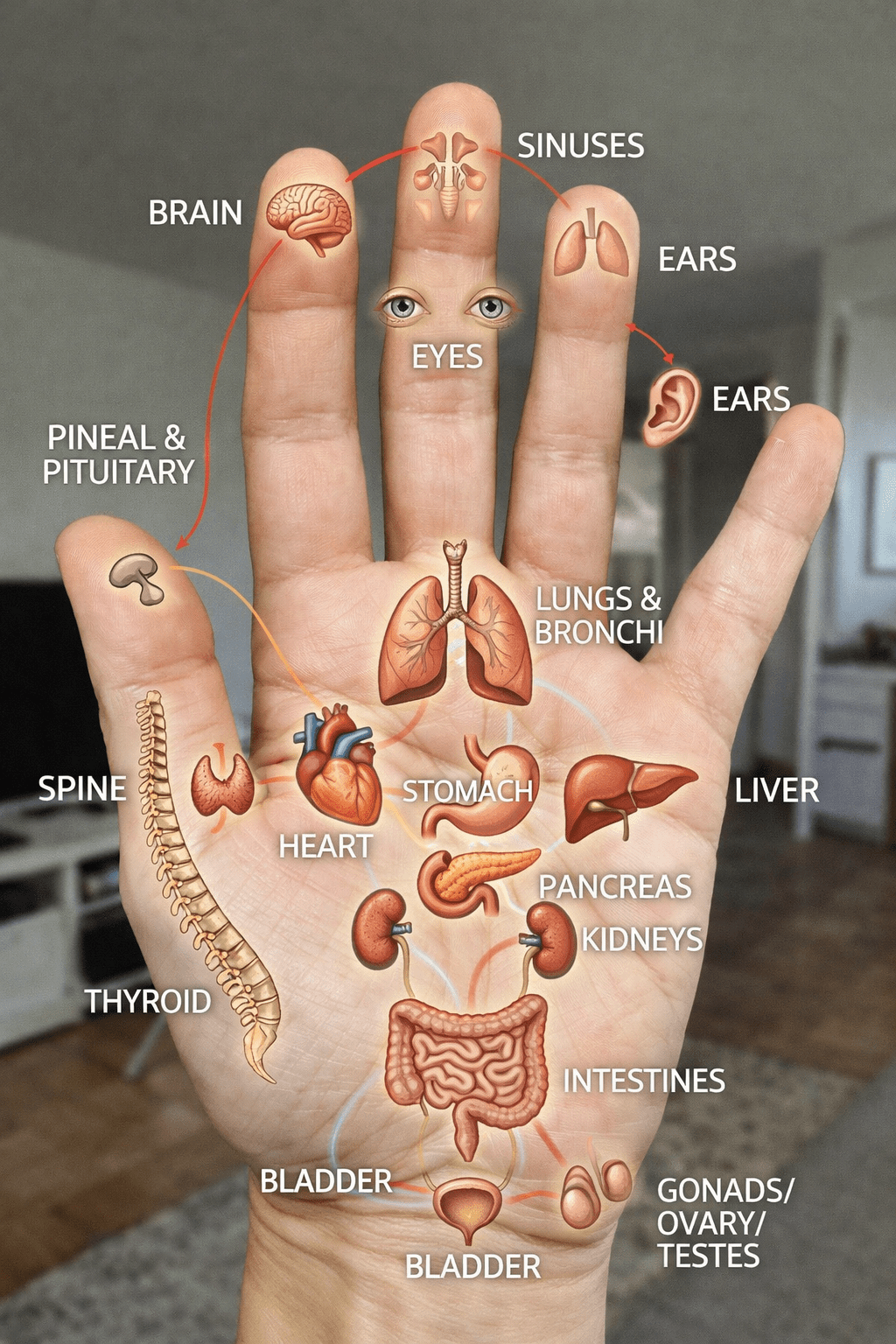
A hand reflexology chart is a visual guide that divides the hand into general zones. These zones are symbolic representations used in relaxation practices.
Common Chart Zones Include:
- Fingers: Often associated with head and mental focus
- Thumb: Linked with tension release and breathing awareness
- Palm center: Connected with grounding and calm
- Outer palm: Associated with balance and stability
- Wrist area: Linked to overall relaxation
Charts may vary slightly, but the goal is not precision—it’s awareness and gentle engagement.
ADVERTISEMENT
