
ADVERTISEMENT
When You See Bees Like This, Don’t Be Afraid: Why You Should Never Call Firefighters, Move Them, or Harm Them
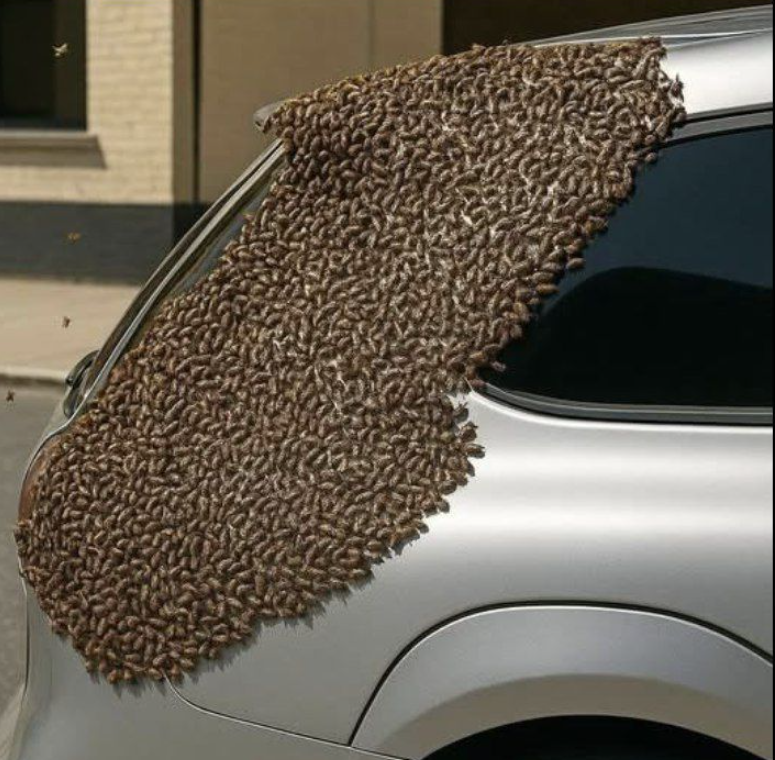
If you ever walk outside and suddenly notice a large cluster of bees gathered on a tree branch, fence, wall, or even a parked car, your first instinct might be fear. Many people immediately think of danger, stings, or an emergency and rush to call firefighters or civil protection. Others panic and try to spray, poison, or remove the bees themselves.
Stop. Take a breath.
What you are witnessing is not an attack, not an invasion, and not a threat. It is one of the most fascinating and important natural behaviors in the world: a bee swarm.
This article will explain—clearly and calmly—why you should not be afraid, why you should never harm or move the bees, what is actually happening, and how your simple decision to leave them alone can help protect the environment, agriculture, and even human survival.
Understanding What You’re Seeing: What Is a Bee Swarm?
A swarm occurs when a honeybee colony becomes too large for its hive. To survive and expand, the colony splits. The old queen leaves the hive with thousands of worker bees to find a new home.
During this process, the bees temporarily gather in one place—often forming a large, moving cluster that looks dramatic and frightening to people unfamiliar with it.
But here’s the truth:
Swarming bees are at their calmest and least aggressive state.
They are not defending a hive. They are not looking for food. They are focused on protecting their queen and finding a new home.
Why Swarming Bees Are Not Dangerous
1. They Are Not Defending Anything
Most bee stings happen when bees feel their hive or honey is under threat. During a swarm, they have no hive to defend, which makes them far less likely to sting.
2. They Are Full of Honey
Before leaving their old hive, bees fill up on honey to prepare for the journey. A full bee is calmer and less aggressive—it’s physically harder for a honey-filled bee to sting.
3. Their Only Goal Is Survival
Swarming bees are not interested in humans. Their entire focus is on staying together, protecting the queen, and finding a safe place to settle.
In most cases, you can stand just a few meters away and observe them safely.
Why You Should Never Call Firefighters or Civil Protection
Firefighters and emergency services are trained to save lives and property—not to manage wildlife pollinators. When bees are reported as an emergency, tragic outcomes often follow.
Common Outcomes of Emergency Calls
- Bees are sprayed with chemicals
- Colonies are destroyed
- Thousands of essential pollinators are killed
- The queen often dies, ending the entire colony
In many regions, emergency services now redirect bee calls to beekeepers, because killing bees creates far more harm than benefit.
Calling emergency services should only be considered if:
- Bees are trapped indoors with no exit
- Someone nearby has a severe allergy and immediate risk
Otherwise, bees are not an emergency.
ADVERTISEMENT
