
ADVERTISEMENT
How Cassava Becomes Dangerous
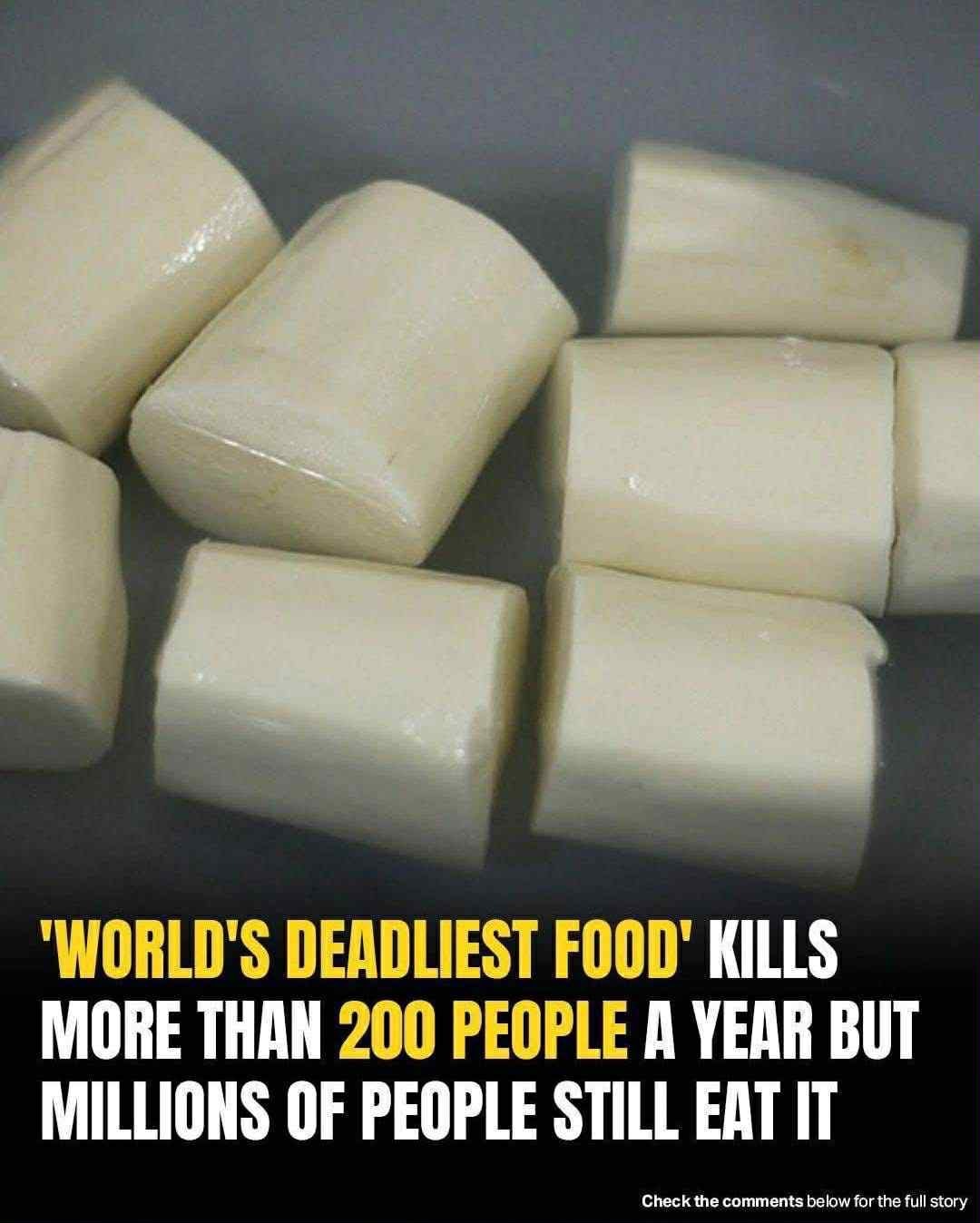
Cassava is not dangerous by default. It becomes dangerous when:
- Eaten raw
- Insufficiently soaked
- Improperly dried
- Poorly fermented
- Rushed during preparation
Traditional preparation methods were developed specifically to remove toxins—but they take time, water, and knowledge.
When those elements are missing, risk increases dramatically.
The Chemistry Behind the Risk (In Simple Terms)
Cassava contains compounds that:
- Break down into hydrogen cyanide
- Are released when cells are crushed or cut
Heat, soaking, fermenting, and drying:
- Break down these compounds
- Allow cyanide to evaporate or leach out
Without these steps, cyanide remains trapped inside the food.
How People Have Safely Eaten Cassava for Centuries
Cassava has been consumed for thousands of years.
Traditional cultures developed safe methods long before modern chemistry explained why they worked.
These methods include:
- Grating and soaking
- Fermentation
- Sun-drying
- Boiling thoroughly
- Pressing pulp to remove liquid
When followed correctly, these techniques make cassava safe and nourishing.
Why Do Deaths Still Occur?
Despite centuries of knowledge, cassava poisoning still happens—especially in vulnerable regions.
Main reasons include:
1. Food Shortages
During famine or drought, people may rush preparation or eat cassava raw out of desperation.
2. Conflict and Displacement
War and displacement disrupt traditional food practices and access to clean water.
3. Poverty
Lack of fuel, time, or resources can prevent proper processing.
4. Loss of Traditional Knowledge
Younger generations may not fully learn safe preparation methods.
5. Climate Stress
Extreme weather pushes communities toward more toxic bitter cassava varieties.
Konzo: The Disease Linked to Cassava Poisoning
One of the most tragic outcomes of chronic cassava poisoning is konzo—a neurological disease.
Konzo causes:
- Sudden, irreversible paralysis of the legs
- Mostly affects children and women
- Often appears after periods of famine
Konzo is not caused by cassava alone—but by reliance on poorly processed cassava during protein deficiency.
Why Cassava Is Still Essential Despite the Risk
If cassava is dangerous when mishandled, why do people keep eating it?
The answer is survival.
Cassava:
- Grows when other crops fail
- Requires minimal inputs
- Produces high calorie yields
- Stores well underground
For many communities, there is no alternative staple.
Cassava doesn’t replace food—it is the food.
Cassava in the Modern World
In wealthier regions, cassava appears in:
- Tapioca pearls
- Gluten-free flour
- Snacks and chips
- Desserts
These products are produced using industrial processing standards that remove toxins completely.
As a result, cassava products sold commercially are safe for consumption.
ADVERTISEMENT
