
ADVERTISEMENT
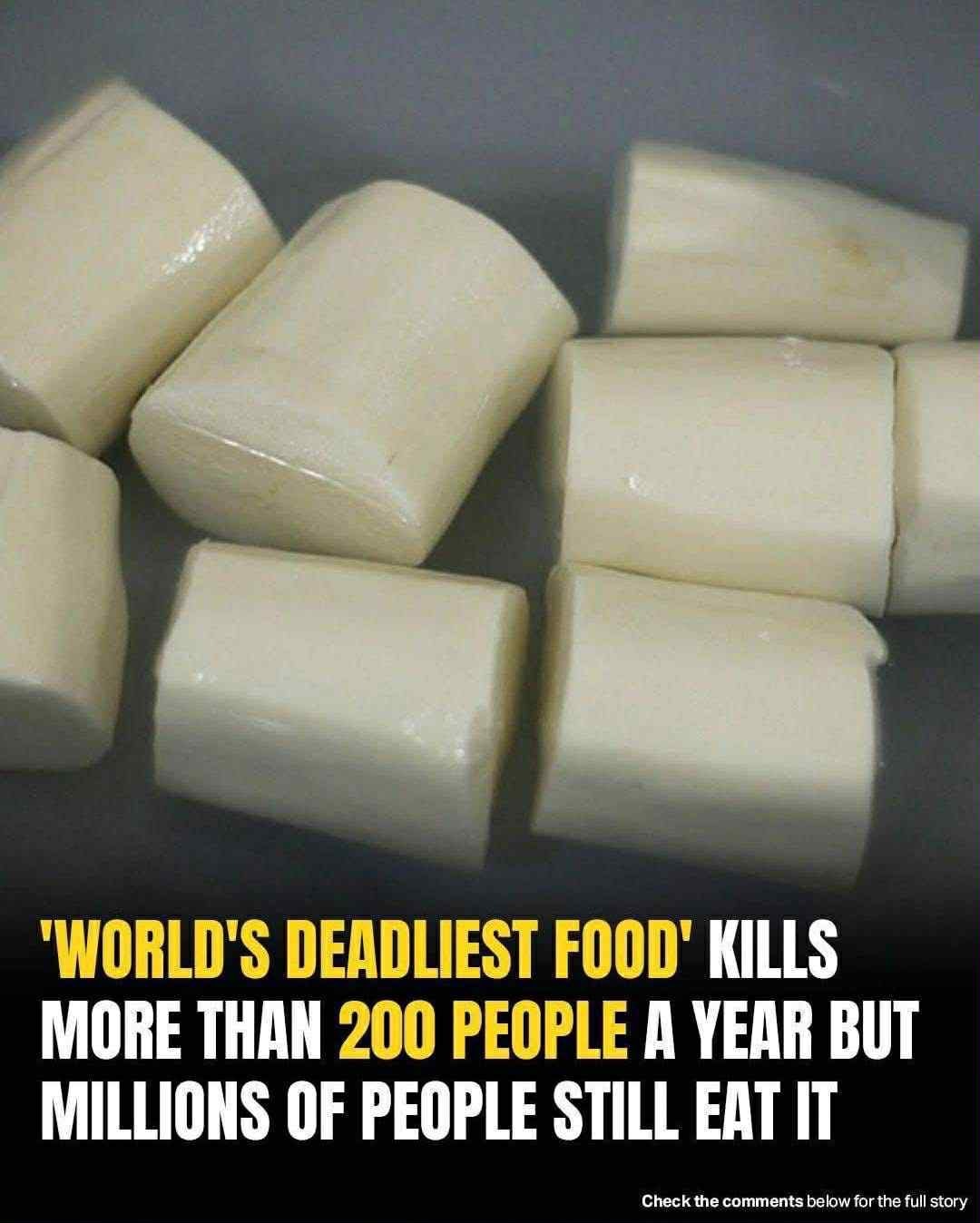
The “World’s Deadliest Food” Claims Over 200 Lives Every Year—Yet Nearly 500 Million People Still Eat It
It sounds like a contradiction.
How can a food be labeled “the world’s deadliest” and still be eaten daily by hundreds of millions of people across the globe?
Yet this is exactly the case with cassava—a starchy root that feeds nearly 500 million people worldwide, while being linked to over 200 deaths each year when improperly prepared.
This article unpacks the truth behind the headline:
- What cassava is
- Why it can be dangerous
- How people have safely eaten it for centuries
- Why deaths still occur
- And what this paradox teaches us about food, culture, and survival
Let’s separate myth from reality—and understand why this “deadly” food remains essential to so many lives.
What Is Cassava?
Cassava (also known as manioc, yuca, or tapioca root) is a tropical tuber native to South America. Today, it is widely grown in:
- Africa
- Southeast Asia
- Latin America
Cassava is prized because it is:
- Extremely drought-resistant
- Able to grow in poor soil
- High in carbohydrates
- Easy to cultivate at scale
For many communities, cassava is not a choice—it is a lifeline.
Why Cassava Is Called “The World’s Deadliest Food”
Cassava contains naturally occurring cyanogenic glycosides—chemical compounds that can release cyanide when the plant is damaged or improperly processed.
Cyanide is a potent toxin. In sufficient quantities, it can:
- Interfere with oxygen delivery in the body
- Cause acute poisoning
- Lead to paralysis
- Be fatal
This is why cassava earns its alarming nickname.
But the key word here is improperly.
Sweet Cassava vs. Bitter Cassava
Not all cassava is equally dangerous.
Sweet Cassava
- Lower cyanide content
- Commonly sold in markets
- Safer when properly cooked
Bitter Cassava
- Much higher cyanide levels
- Often grown for resilience
- Requires careful processing
Bitter cassava is where most danger lies—especially during food shortages or emergencies.
ADVERTISEMENT
