
ADVERTISEMENT
4. Genetics
If your parents or close relatives have skin tags, you may be more likely to develop them as well. Genetics can influence how your skin responds to friction, hormones, and metabolic changes.
Some people are simply more prone to developing benign skin growths than others.
5. Weight Gain and Obesity
Excess weight can increase:
- Skin folds
- Friction
- Inflammation
This creates an environment where skin tags are more likely to form. Weight gain can also worsen insulin resistance, which further contributes to their development.
Are Skin Tags Dangerous?
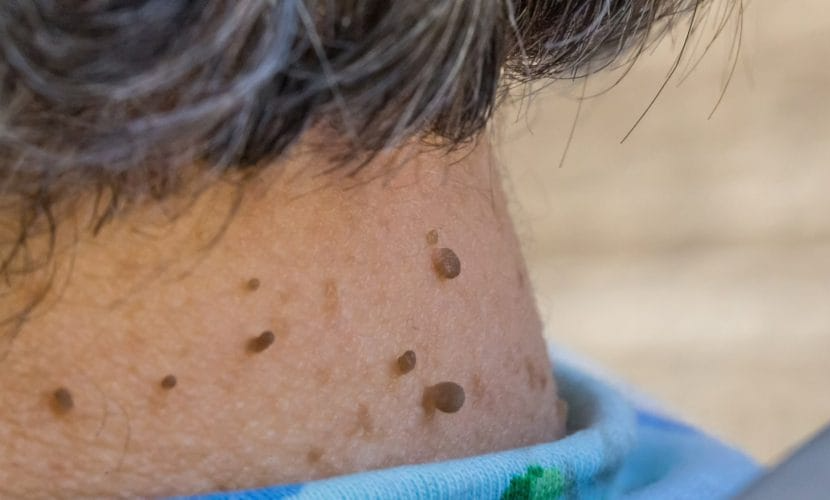
In most cases, skin tags are completely harmless. They are non-cancerous and do not turn into skin cancer.
However, there are a few situations where you should seek medical advice:
- The skin tag changes color suddenly
- It becomes painful, bleeding, or inflamed
- It grows rapidly or looks unusual
- You’re unsure whether it’s actually a skin tag
A dermatologist can easily distinguish a skin tag from other growths such as warts, moles, or more serious lesions.
Can Skin Tags Fall Off on Their Own?
Occasionally, yes. If a skin tag’s blood supply is cut off—often by twisting—it may darken, shrink, and fall off naturally. However, this process can be uncomfortable and unpredictable.
Most skin tags do not disappear on their own and will remain unless removed.
How to Get Rid of Skin Tags: What Experts Recommend
1. Medical Removal (Safest Option)
Dermatologists consider medical removal the gold standard for skin tag treatment.
Common professional methods include:
- Snipping with sterile scissors
- Cauterization (burning)
- Cryotherapy (freezing)
These procedures are quick, usually painless, and performed in a medical setting with minimal risk of infection or scarring.
Medical removal is especially important if:
- The skin tag is large
- It’s located in a sensitive area (eyelids, genitals)
- You’re unsure of the diagnosis
2. At-Home Treatments: What to Know
Many people look for home remedies to remove skin tags. While some may work for small, uncomplicated skin tags, experts urge caution.
Tea Tree Oil
Known for its antimicrobial properties, tea tree oil is sometimes applied daily to dry out small skin tags. Results vary, and irritation is possible.
Apple Cider Vinegar
Often used to gradually dry out skin tags, though it can cause skin burns if misused.
Over-the-Counter Skin Tag Removal Kits
Some products use freezing or banding methods. These can be effective when used correctly but may cause irritation or scarring if misapplied.
Important warning:
Never cut, burn, or tie off a skin tag at home without professional guidance—especially if you have diabetes or poor circulation.
ADVERTISEMENT
