
ADVERTISEMENT
Types of Milia
Understanding the type of milia you have can help guide proper care.
1. Primary Milia
- Most common type
- Occur spontaneously
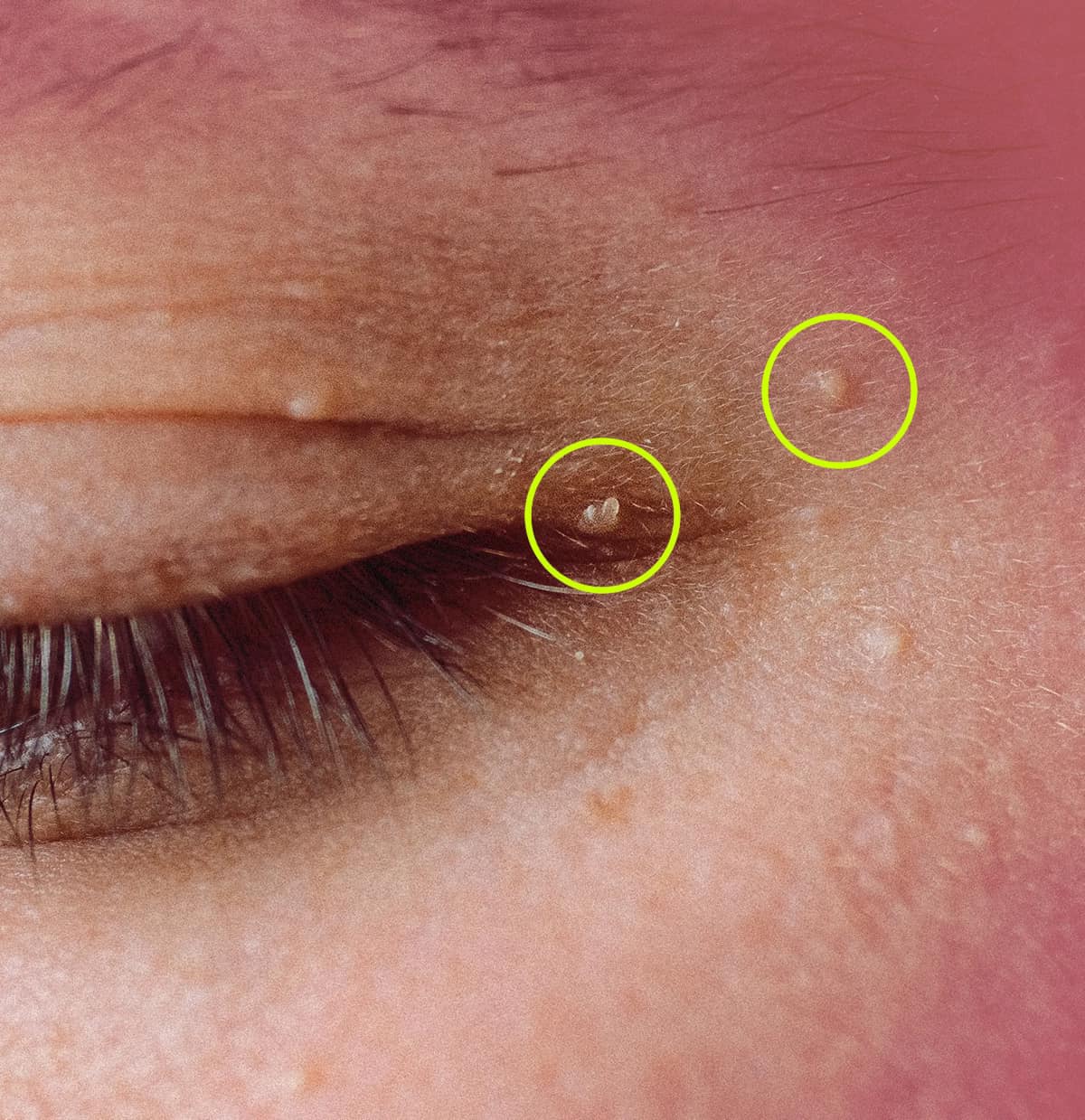
- Often appear around eyes and cheeks
- Seen in adults and infants
2. Secondary Milia
- Develop after skin trauma
- Can follow burns, rashes, blisters, or aggressive treatments
- Result from disrupted skin healing
3. Neonatal Milia
- Common in newborns
- Appear on nose and cheeks
- Resolve on their own within weeks
4. Multiple Eruptive Milia
- Rare
- Appear in clusters
- May persist for months
Why Do Milia Form?
Milia develop when the skin’s natural exfoliation process is disrupted. Several factors can contribute.
Common Causes of Milia in Adults
1. Dead Skin Buildup
When dead skin cells don’t shed properly, keratin can become trapped.
2. Heavy or Occlusive Skincare Products
Thick creams, petroleum-based products, and heavy eye creams can block normal exfoliation.
3. Sun Damage
Sun exposure thickens the outer layer of skin, making it harder for keratin to escape.
4. Skin Trauma
Burns, laser treatments, rashes, or aggressive exfoliation can trigger secondary milia.
5. Aging Skin
As skin ages, cell turnover slows, increasing the risk of keratin buildup.
6. Improper Exfoliation
Both over-exfoliating and under-exfoliating can contribute.
Areas Where Milia Commonly Appear
- Under and around the eyes
- Upper cheeks
- Nose
- Forehead
- Eyelids
- Occasionally chest or genitals (less common)
The eye area is particularly prone because the skin is thin and delicate.
What NOT to Do: Common Milia Mistakes
Before discussing solutions, it’s crucial to understand what makes milia worse.
❌ Don’t Squeeze or Pick
Milia do not have an opening. Squeezing can:
- Damage skin
- Cause scarring
- Lead to infection
- Trigger more milia
❌ Don’t Use Harsh Scrubs
Physical scrubs with large particles can irritate skin and worsen keratin trapping.
❌ Don’t Overuse Acne Treatments
Benzoyl peroxide and strong acne products often irritate without helping milia.
❌ Don’t Apply Thick Creams Repeatedly
Especially around the eyes unless specifically formulated for that area.
Safe Ways to Reduce and Manage Milia
Milia often resolve on their own, but there are safe strategies to help prevent and reduce them.
ADVERTISEMENT
