
ADVERTISEMENT
Why Stretching Your Ring Finger Might Feel Surprisingly Good
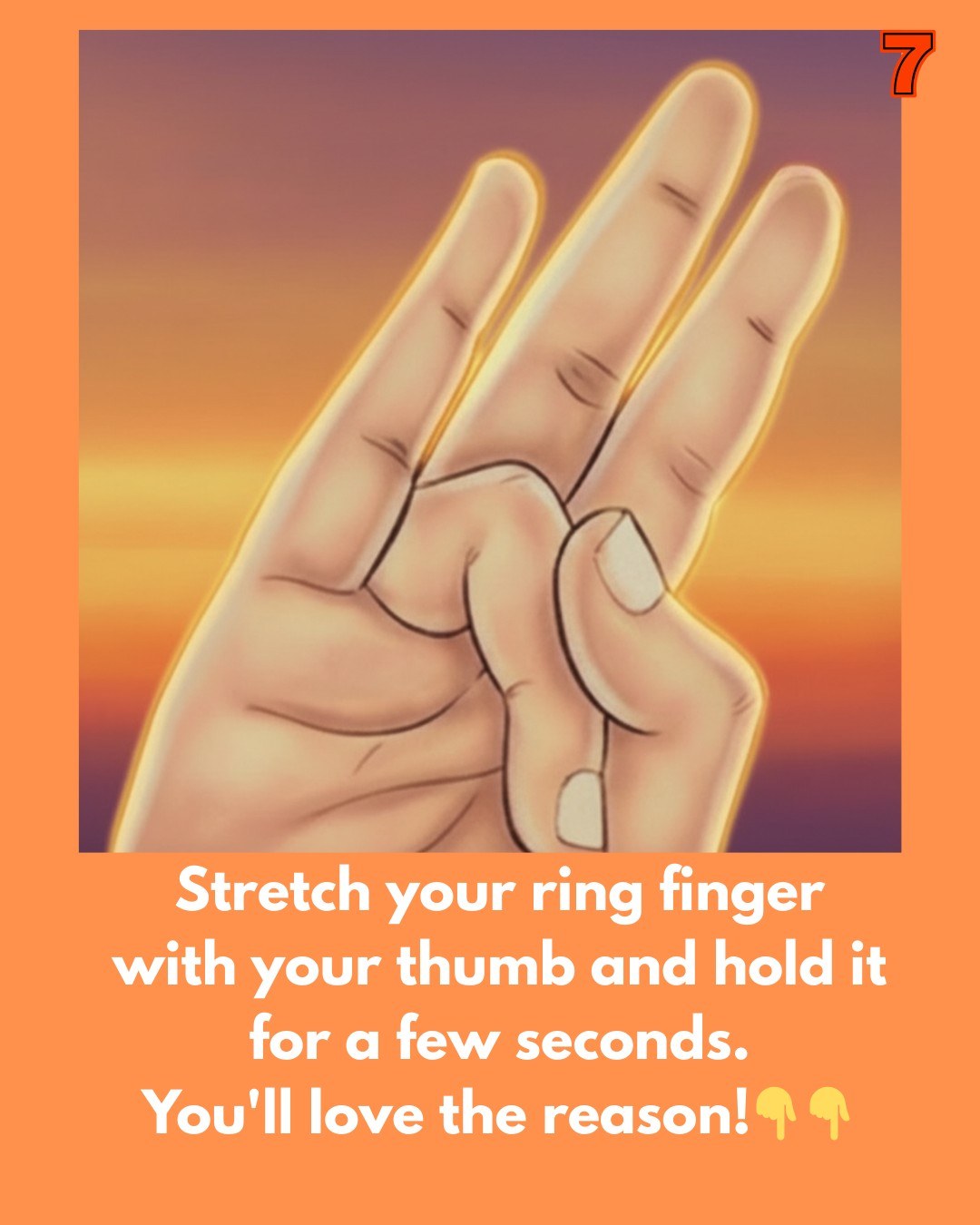
At first glance, it sounds almost too simple to matter. Stretching a single finger—specifically the ring finger—hardly seems like something that could have a noticeable effect on your body or mind. Yet many people report an unexpected sensation when they stretch this finger: relief, calm, warmth, or even a subtle feeling of well-being that’s difficult to explain.
So why does stretching your ring finger feel surprisingly good?
The answer lies at the fascinating intersection of anatomy, nerves, tendons, brain connections, traditional medicine, and modern neuroscience. This small movement engages far more of your body than you might expect.
Let’s explore what’s really happening—and why this simple stretch may be more powerful than it looks.
The Ring Finger: More Important Than You Think
The ring finger, medically known as the fourth digit, often gets overlooked. It’s not as dominant as the index finger, not as expressive as the middle finger, and not as agile as the thumb. Yet structurally and neurologically, it plays a unique role.
Unlike the index and middle fingers, the ring finger shares tendons with neighboring fingers. This means it doesn’t move as independently, making it more prone to stiffness and tension. Over time—especially with typing, phone use, gripping tools, or repetitive tasks—this finger can quietly accumulate stress.
When you stretch it, you’re often releasing tension that’s been ignored for years.
The Hidden Network of Tendons and Muscles
Your fingers are controlled not by muscles in your fingers themselves, but by muscles located in your forearm. These muscles connect to the fingers through long tendons that pass through the wrist.
The ring finger is closely linked to:
- Flexor digitorum profundus
- Flexor digitorum superficialis
- Extensor digitorum
When you stretch the ring finger, you’re not just moving a joint—you’re gently pulling on a chain of tissues that extends all the way up the arm.
That’s one reason the sensation can feel deeper than expected.
Why the Stretch Feels “Different”
Many people describe stretching the ring finger as:
- Surprisingly relieving
- Slightly warm
- Relaxing
- Grounding
- Comforting
This happens because the movement stimulates mechanoreceptors—special sensory receptors in muscles, tendons, and joints. These receptors send signals to the brain that help regulate tension and posture.
When stimulated slowly and gently, they can activate the parasympathetic nervous system, the part responsible for rest, calm, and recovery.
In simple terms: your body reads the stretch as a signal to relax.
The Brain–Finger Connection
Each finger occupies a specific area in the brain’s somatosensory cortex—the region responsible for processing touch and movement. The ring finger’s brain representation overlaps significantly with nearby fingers, making it neurologically “crowded.”
Stretching it helps improve sensory clarity and neural communication, which may explain why the sensation feels unusual or unexpectedly pleasant.
You’re essentially giving your brain new, clearer input from an area that doesn’t get much independent attention.
ADVERTISEMENT
