
ADVERTISEMENT
Where You Store Milk in the Fridge Matters More Than You Think
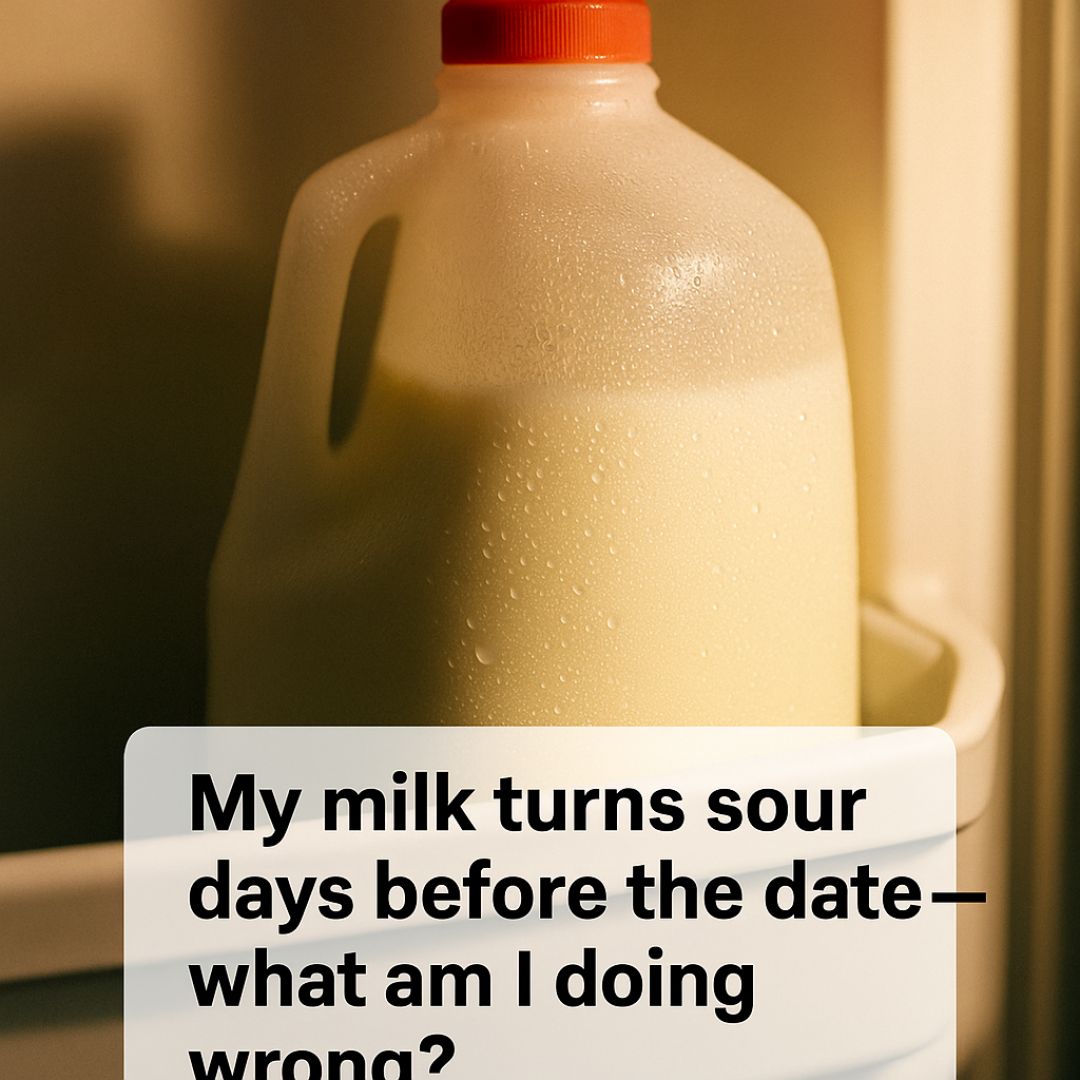
Worst Place to Store Milk: The Door
The fridge door is the warmest area, exposed to temperature changes every time it’s opened.
Storing milk in the door:
- Exposes it to warm air repeatedly
- Causes faster bacterial growth
- Shortens freshness by days
Best Place to Store Milk
- Back of the fridge
- Bottom shelf
- Coldest, most stable area
This simple change alone can significantly extend milk freshness.
Frequent Temperature Fluctuations: The Silent Spoiler
Milk is extremely sensitive to temperature changes.
Milk can spoil early if:
- You leave it out too long during meals
- It sits in a warm car after shopping
- Power outages affect refrigeration
- The fridge door is opened often
Even short periods above safe temperatures allow bacteria to multiply.
Rule of thumb:
Milk should not sit out for more than 2 hours, or 1 hour in warm conditions.
Cross-Contamination: An Overlooked Cause
Milk can spoil early due to contamination introduced at home.
Common Contamination Sources
- Drinking directly from the carton
- Using dirty cups or spoons
- Pouring unused milk back into the container
- Touching the rim with unclean hands
Each introduces bacteria that rapidly multiply inside the carton.
Best Practice
- Pour milk into a clean glass
- Never drink directly from the container
- Keep the lid clean and tightly sealed
Air Exposure and Improper Sealing
Milk cartons and jugs are designed to stay sealed tightly. When air enters the container, bacteria thrive.
Milk may spoil faster if:
- The cap isn’t fully closed
- The carton is damaged
- You frequently open and close it
Always ensure the lid clicks or seals fully after every use.
Store Handling Before You Buy It
Sometimes the issue starts before the milk reaches your fridge.
Milk may have been:
- Left out during stocking
- Exposed to warm delivery trucks
- Handled improperly by customers
Unfortunately, you can’t control this—but you can reduce risk.
Smart Shopping Tips
- Grab milk last before checkout
- Choose cartons from the back of the shelf
- Avoid containers that feel warm
- Use insulated bags for transport
ADVERTISEMENT
