
ADVERTISEMENT
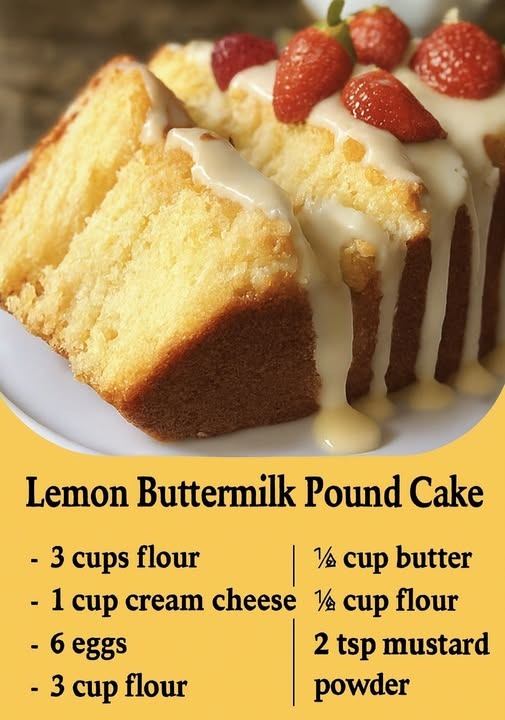
What Makes This Pound Cake So Moist?
Moisture is the hallmark of a great pound cake, and this recipe delivers it in several ways:
- High butter content for richness and tenderness
- Buttermilk for hydration and softness
- Eggs for structure and moisture retention
- Proper mixing to avoid overworking the batter
- Slow baking to ensure even cooking
Some versions also include a lemon syrup poured over the cake while warm, which locks in moisture and intensifies flavor. Even days later, this cake stays soft and delicious.
Ingredients Breakdown (And Why Each One Matters)
Understanding your ingredients helps ensure success every time.
Butter
Use real, unsalted butter at room temperature. Butter provides flavor, moisture, and structure. Creaming it properly with sugar is essential for incorporating air.
Sugar
Granulated sugar sweetens the cake and helps with browning. It also plays a role in creating a tender crumb when creamed with butter.
Eggs
Eggs bind the ingredients together and provide structure. Room-temperature eggs mix more evenly and help prevent curdling.
All-Purpose Flour
Flour forms the backbone of the cake. Measure carefully to avoid a dry texture.
Buttermilk
Adds tang, tenderness, and moisture. If you don’t have buttermilk, you can make a substitute by adding lemon juice or vinegar to milk, though real buttermilk is preferred.
Lemon Zest and Juice
Zest delivers intense lemon aroma, while juice provides acidity and brightness. Fresh lemons are essential—bottled juice won’t compare.
Vanilla Extract
Vanilla rounds out the lemon flavor and adds warmth.
Salt
Salt enhances sweetness and balances flavors. Never skip it.
Step-by-Step Baking Tips for Perfect Results
Even a simple cake benefits from attention to detail. Follow these tips for a flawless lemon buttermilk pound cake.
1. Bring Ingredients to Room Temperature
Cold butter or eggs can cause the batter to separate. Room-temperature ingredients blend smoothly and evenly.
2. Cream Butter and Sugar Properly
This step is crucial. Beat until the mixture is light and fluffy, usually 3–5 minutes. This creates air pockets that help the cake rise.
3. Add Eggs One at a Time
This ensures proper emulsification and prevents curdling.
4. Alternate Dry and Wet Ingredients
Add flour and buttermilk in stages, beginning and ending with flour. This keeps the batter smooth and prevents overmixing.
5. Don’t Overmix
Once flour is added, mix just until combined. Overmixing leads to a dense, tough cake.
6. Bake Low and Slow
Pound cake benefits from a moderate oven temperature. This allows the center to cook through without drying out the edges.
ADVERTISEMENT
