
ADVERTISEMENT
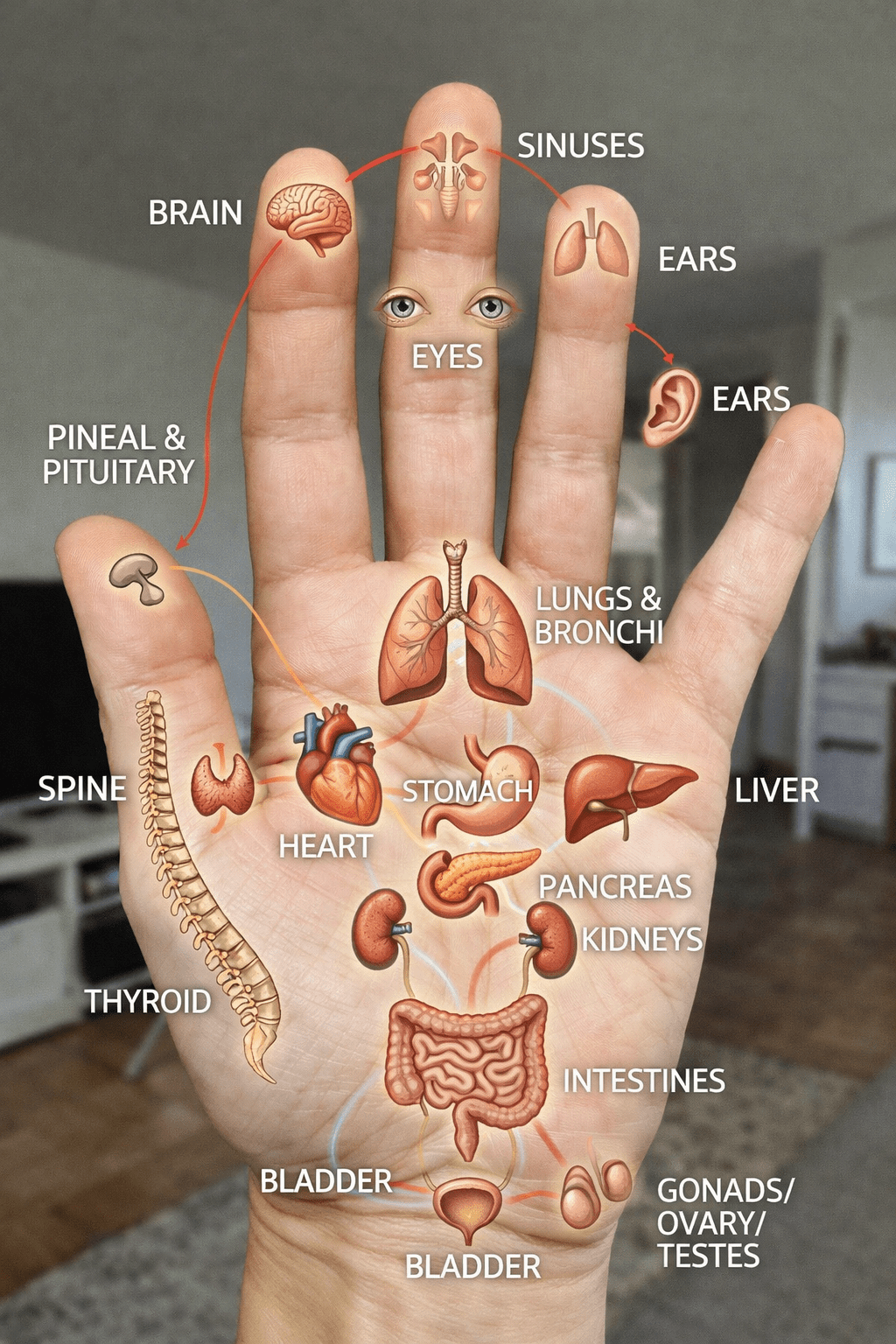
How to Read a Hand Reflexology Chart Without Overthinking It
Many beginners worry about “doing it wrong.” The truth is, hand reflexology is forgiving.
Key principles:
- Use the chart as a guide, not a rulebook
- Focus on comfort, not pressure
- Follow sensations, not perfection
If a spot feels tense or sensitive, that’s often where people naturally pause and breathe.
Getting Started: Preparing for a Session
Before using a reflexology chart, set the tone.
Step 1: Find a Comfortable Position
Sit or stand where your shoulders and hands feel relaxed.
Step 2: Warm Your Hands
Rub your palms together for 10–15 seconds to increase warmth and awareness.
Step 3: Slow Your Breathing
Take a few deep, unhurried breaths before beginning.
This small preparation enhances the calming effect.
Basic Hand Reflexology Techniques Anyone Can Try
1. Thumb Walking
Use your thumb to make small, walking-like movements across the palm.
2. Gentle Press and Release
Press lightly for 3–5 seconds, then release.
3. Circular Motions
Use slow, circular movements with your thumb or fingers.
4. Finger Pulling
Gently pull and massage each finger from base to tip.
None of these techniques should cause pain. Comfort is the priority.
A Simple Daily Hand Reflexology Routine (10 Minutes)
Minute 1–2: Center the Palm
Massage the middle of the palm in slow circles.
Minute 3–4: Thumb Area
Apply gentle pressure around the thumb base.
Minute 5–6: Fingers
Massage each finger slowly, one at a time.
Minute 7–8: Outer Palm
Use your thumb to trace along the outer edge of the hand.
Minute 9–10: Wrist Area
Gently massage around the wrist to finish.
Switch hands halfway through or repeat the full routine on both.
ADVERTISEMENT
