
ADVERTISEMENT
6. Condition and Protect Wooden Surfaces
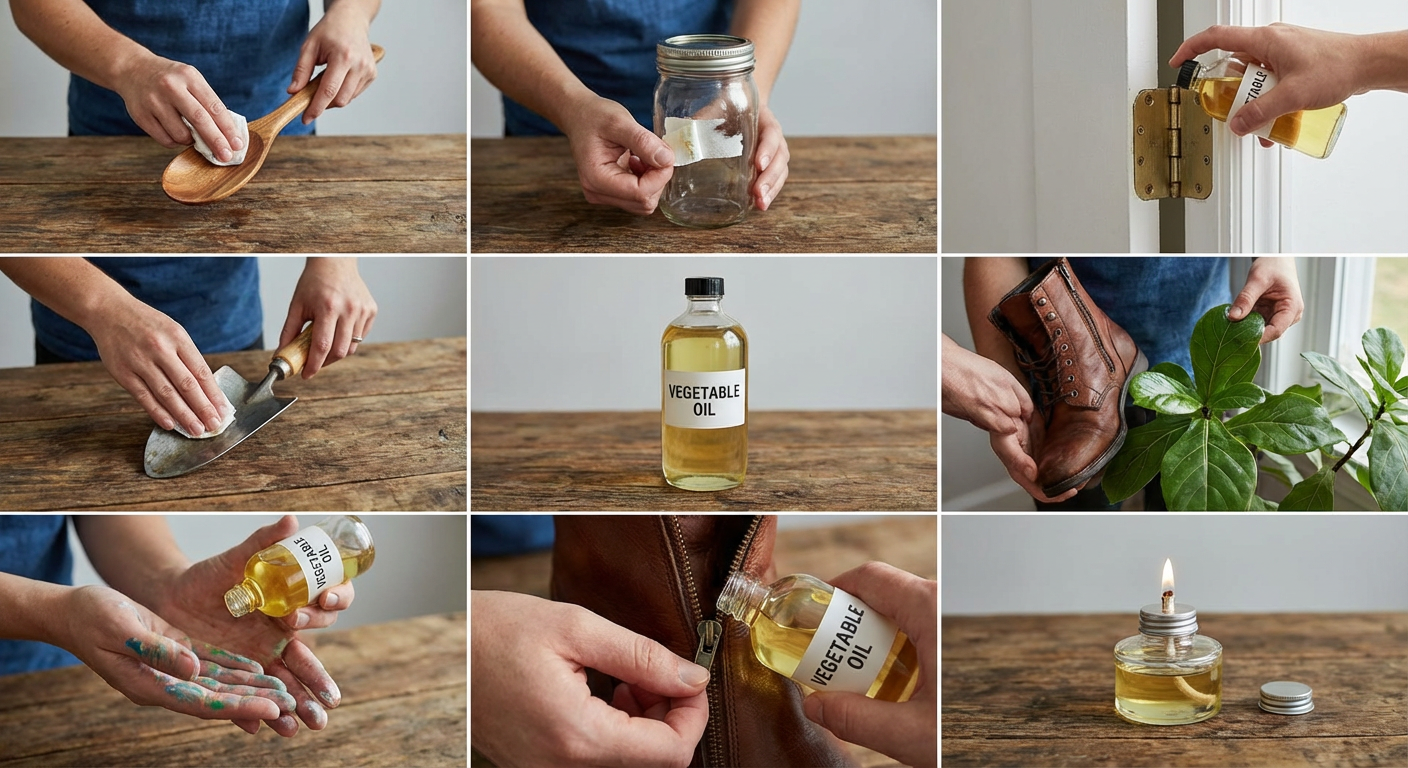
Wooden furniture, cutting boards, and utensils can dry out over time, leading to cracks and dullness.
Vegetable Oil as a Wood Conditioner
Vegetable oil can temporarily nourish wood, restore shine, and reduce dryness.
How to Use It
- Clean the wooden surface
- Apply a small amount of vegetable oil with a cloth
- Rub in circular motions
- Let it absorb for a few minutes
- Wipe off excess
Best For:
- Wooden cutting boards (occasionally)
- Wooden handles
- Decorative wooden items
⚠️ Note: For long-term care of cutting boards, food-grade mineral oil is better—but vegetable oil works in emergencies.
7. Remove Paint from Skin and Brushes
If you’ve ever painted a wall or piece of furniture, you know how stubborn paint can be—especially on skin.
Why Vegetable Oil Is Effective
Oil helps dissolve paint, especially oil-based paints, without drying out skin.
How to Use It on Skin
- Rub a small amount of vegetable oil onto painted skin
- Massage gently
- Wipe off with a cloth
- Wash with soap and water
For Paint Brushes
- Soak the bristles in vegetable oil
- Work the oil through the bristles
- Rinse with warm, soapy water
This method is gentler than harsh solvents.
8. Prevent Food from Sticking (Beyond Cooking)
While vegetable oil is known for cooking, it has clever uses in food prep beyond frying.
Non-Cooking Uses
- Lightly oil measuring cups for sticky ingredients like honey or syrup
- Grease baking molds or ice cube trays
- Prevent pasta or rice from sticking together after cooking
Bonus Tip
Add a drop of oil to cooked pasta before storing to prevent clumping.
These small tricks make food prep easier and cleaner.
ADVERTISEMENT
